Bolivia

South America Carnival Guide 2012

Carnival season is almost here! Of course the most famous carnival is Rio’s, but there are many more. In Brazil alone there are large carnival parties in Salvador, Recife, Paraty and Ouro Preto to name just a few. Quite surprising though is the fact that the second biggest carnival in South America belongs to Barranquilla on the Atlantic coast of Colombia. Then there’s the very traditional carnivals of Bolivia, Argentina and Uruguay, the last of which holds claim to being the longest carnival of all! Continue Reading

Cost of Living in Bolivia

by Richard Lim

Bolivia is one of the most impoverished countries in South American. The cost of living in Bolivia has risen over the last few years, but still remains one of the cheapest countries to live in South America. The economy’s output per person (GDP per capita) was just $1,858 in 2010, the lowest in all of South America, five times smaller than that of Brazil and almost twenty times small than that of the United Kingdom. Continue Reading

Random Is Not Whatever: New Music from Bolivia

by Russ Slater

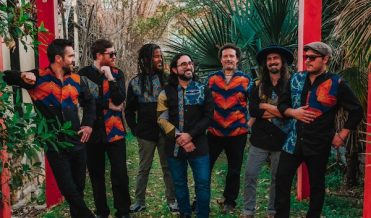
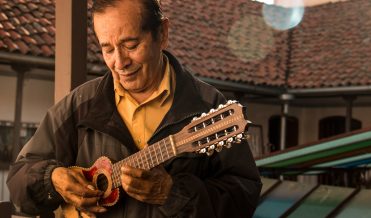
Random Is Not A Whatever are a rare thing, a record label from Bolivia. This year they’ve released a number of albums from Bolivian artists that are clearly influenced by both Latin American and international music but also have an energy and invention that deserves attention. With Bolivia being one of the least connected countries in South America this is attention that is not always forthcoming. Hopefully Random Is Not A Whatever can put that right! Continue Reading

Carnaval de Oruro: Dancing with the Devil in Bolivia’s Carnival

by Russ Slater

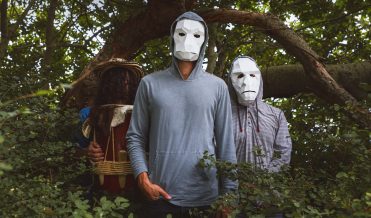
Carnival in the mining town of Oruro has become Bolivia’s most celebrated festival, usurping similar events in La Paz, Santa Cruz and Tarija. It’s easy to see the allure. Carnaval de Oruro is a celebration by Bolivia’s Uru people with a strong religious and spiritual connection, manifesting itself in the shape of the festival’s two icons; Pachamama (Mother Earth in spirit, though with a strong Virgin Mary connection due to the religious connotations of the festival) and Tio Supay (Uncle/God of the mountains, transformed into the devil for these festivities). It’s this image of the devil which has given Oruro its unique charm and caused people for many years to visit this particular festival. Continue Reading

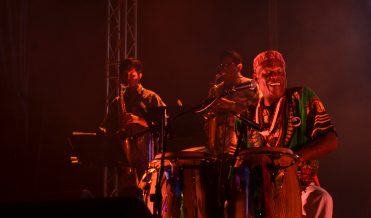
Known as “the roof top of the world” due to its high elevation in the Andes mountains, Bolivia is a melting pot of indigenous and hybrid forms of music and cultural values. Although sixty percent of the country’s population are Indian, speaking mostly Quechua and Aymara, the traditional music of the country was not accepted as a musical idiom until the 1960s, when it became a key ingredient in the socio-political activism taking place in Bolivia, as well as other countries in Latin America. Continue Reading

Ernesto ‘Che’ Guevera and his final days in Bolivia

by Irene Gimeno Espasa

Ernesto Guevara de la Serna lost his life on the 9th of October 1967 at the hands of the Bolivian Army and the CIA in La Higuera, a very little village in the heart of Bolivia, where he was leading a guerrillas force towards the liberation of the Bolivian people and the democratization of the country. A man who had embraced the spirit of South America would become a symbol of the fight of the continent to regain their autonomy from bigger nations which had kidnapped their resources. But what took the masses to conceive ‘El Che’ as a martyr rather than a killer? It’s best to let his story do the talking. Continue Reading

Zona Sur carries on a great Bolivian cinema tradition

by Russ Slater

After showing at the London Film Festival last summer Zona Sur (Southern District), the fourth film by Bolivian director Juan Carlos Valdivia, is set for general release in the UK on 11th March this year. The film, which focuses on the daily lives of a highly-dysfunctional family during the demise of Bolivian apartheid, won both the Best Director and Best Screenplay awards in the World Cinema section of the 2010 Sundance Awards. Continue Reading

In Profile: Simon Bolivar – The Liberator

by Mark Briggs

Simon Bolivar is a name that echoes across South America. His name appears in titles of countries, currencies, and numerous place names and statues throughout the continent. Go anywhere in the Spanish-speaking world and people will know his name. Yet he died on his way to exile, convinced his life work would crumble. Sounds and Colours takes a look at the life, times and legacy of the man known as “El Liberador.” Continue Reading

Socialism is alive and kicking in South America

by Irene Gimeno Espasa

South America has one of the largest concentration of States in the world that would call themselves socialists. Although there are other countries with left-wing governments, this political doctrine seems to have settled more strongly in this continent. With approximately as many nations that have welcomed right wing or Christian-Democratic heads of State, as those which stand-out with a radical left-wing government, overall, South America stands as a spot with a large amount of supporters of the validity of socialism. Continue Reading

Pisco – Booze of the Gods!

by Ed Hart

When grapes came to the New World in the 16th century, first to the Parras, Coahuila, Mexico and later to Peru, Chile and elsewhere in South America, it was with the fervent devotees of the True Cross and the conquistadores. Whilst one was exercised in proselytizing the indigenous population, the other was setting up encomiendas (tribute in the form of labour etc.) and trousering the glittering prizes. What wine there was to be had – was devotional rather than recreational.

The origins of pisco, linguistically at least, come from the Quechua word for little bird, pisqu. The Pisco Valley, 150 miles south of Lima, the port of Pisco and the Ica region in which they lie – are at the heart of the origin, production and exportation of pisco.
Continue Reading

229 Years Since the Sacrifice of Tupac Katari

by Cristina Quisbert. Translated by Neil Greenough

November 14 marked a milestone in the history of the Andean region as it was 229 years since the indigenous leader Tupak Katari was sacrificed. Continue Reading

Latin American News

World Circuit to Release Cumbia Cumbia on March 19th

World Circuit to Release Cumbia Cumbia on March 19th